
The Coasters Present:Greenhouse Air Temperature Monitor
Big ideas, real impact.
For our ENGR 478 Final Project, we drew inspiration from people we know who use greenhouses to grow the food they eat and share with their families. As a group, we realized that a system that can accurately measure air temperature and also work to keep the air temperature within a specific margin could help many develop a more efficient and sustainable source of food.
-
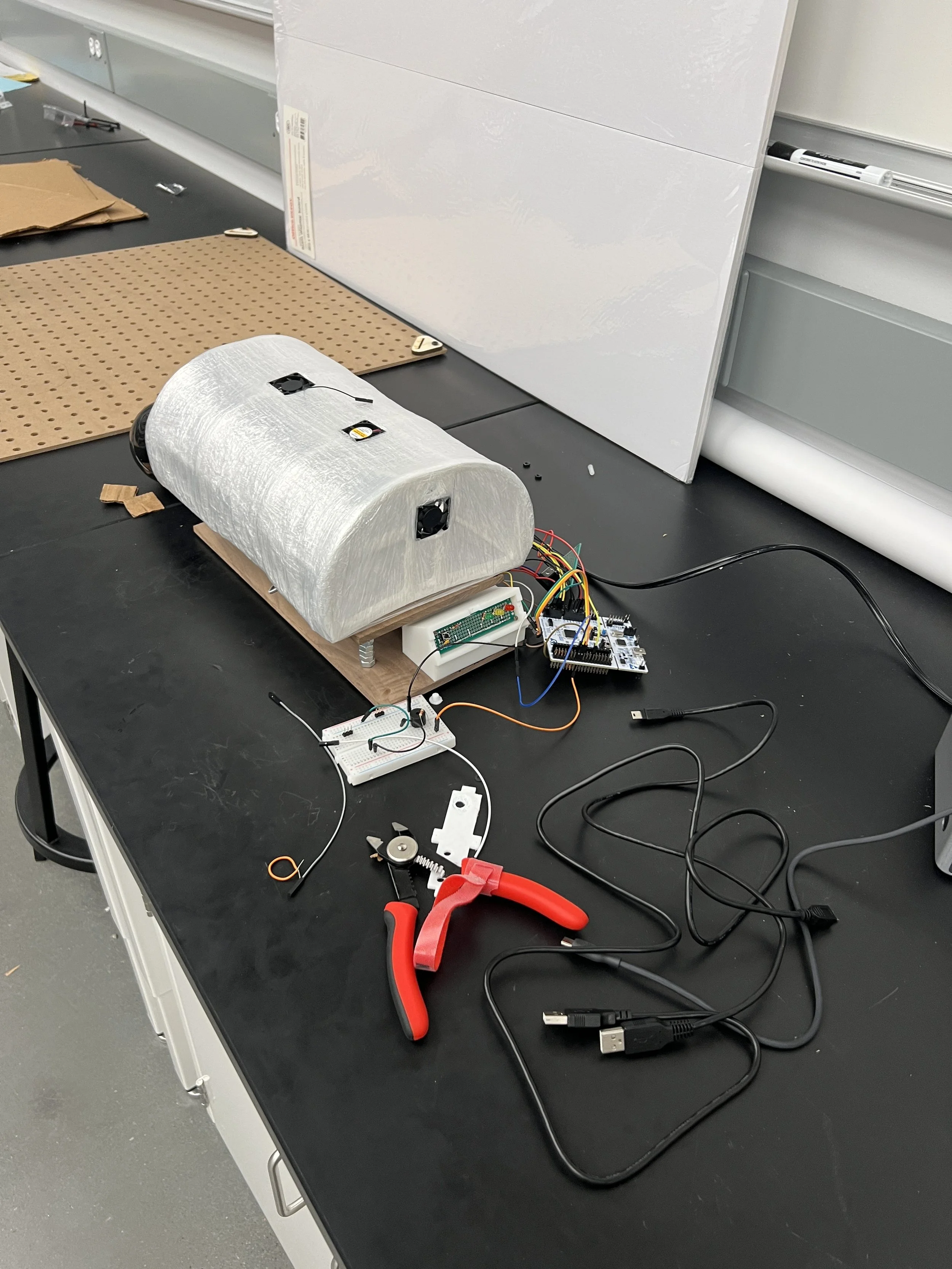
This device monitors the air temperature inside of an enclosure. Using two preset temperatures, one for target, and one for when its way too hot, the system will monitor and work to bring the temperature down if it’s too high. When it reaches that temperature, an alarm will sound, and the user can press a button to acknowledge it and turn on the fans to push out the hot air inside the enclosure, with an extra fan pulling in cool outside air.
-
Using two thermistors, the STM32 sends a voltage through the sensors. The resistance of the thermistor changes with temperature, altering the voltage across the sensors. The microprocessor then averages the readings to give a more consistent value, which is then used to determine where the temperature sits between the set thresholds and displays it via the LEDs. When the temperature reaches the set threshold, the STM32 activates the alarm, which is silenced only when the temperature drops or when the user acknowledges it by pressing the button. Pressing the button activates an edge trigger interrupt that turns on a MOFSET controlling power to the fans, while also disabling the alarm.
-
For future improvements, building a model with more durable materials would make testing of the system much simpler. Adding a way to set threshold temperatures externally would also benefit users, making it easier to modify to a per-case use. Even without a deep understanding of the code. Using linear active thermistors would also make the program much simpler, as they are pre-calibrated and offer additional functionality. Adding extra sensors to measure light intensity, humidity, and soil moisture would also greatly enhance functionality. But as of now, the system works and delivers on the functions set out before we started.
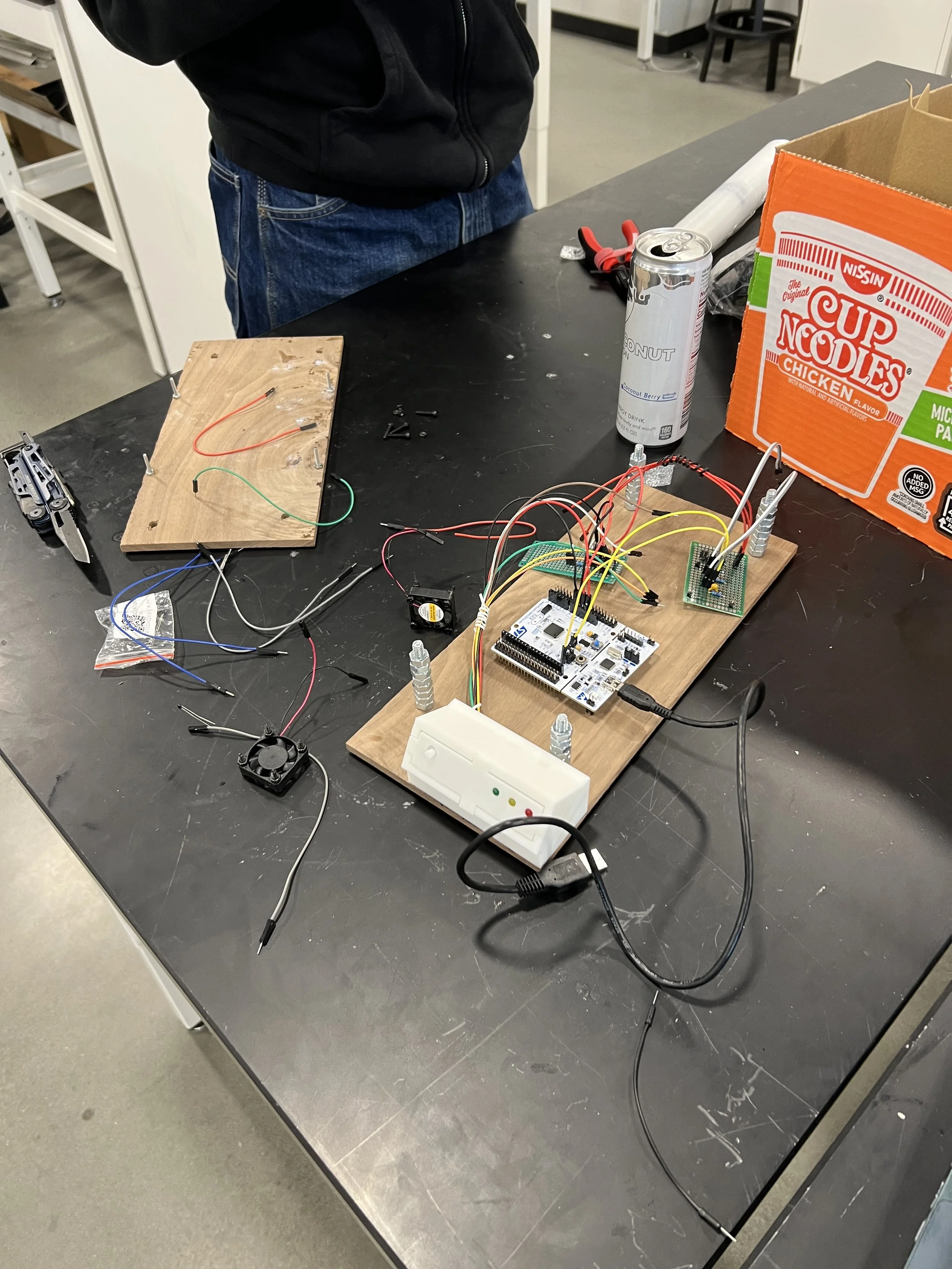
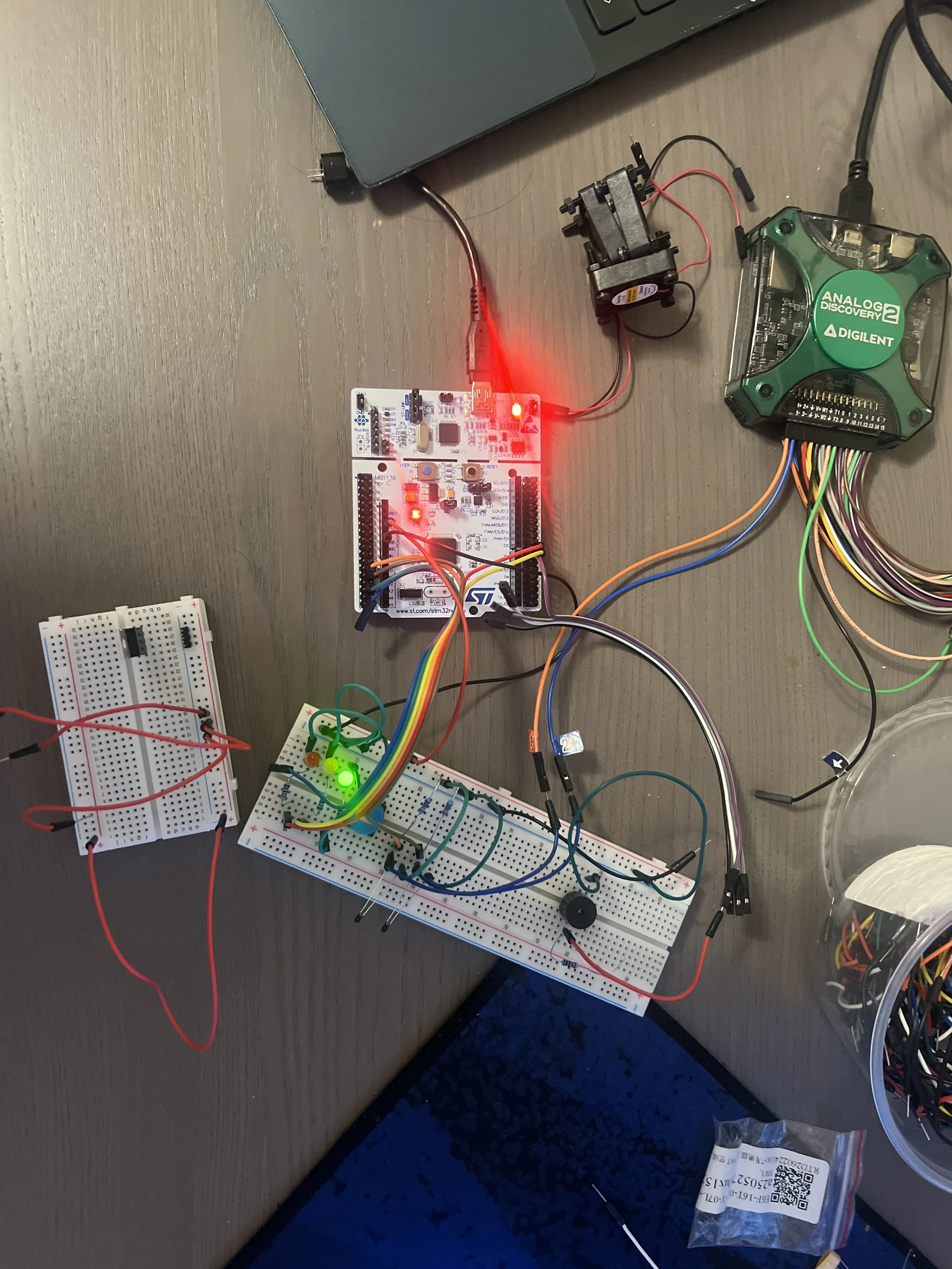
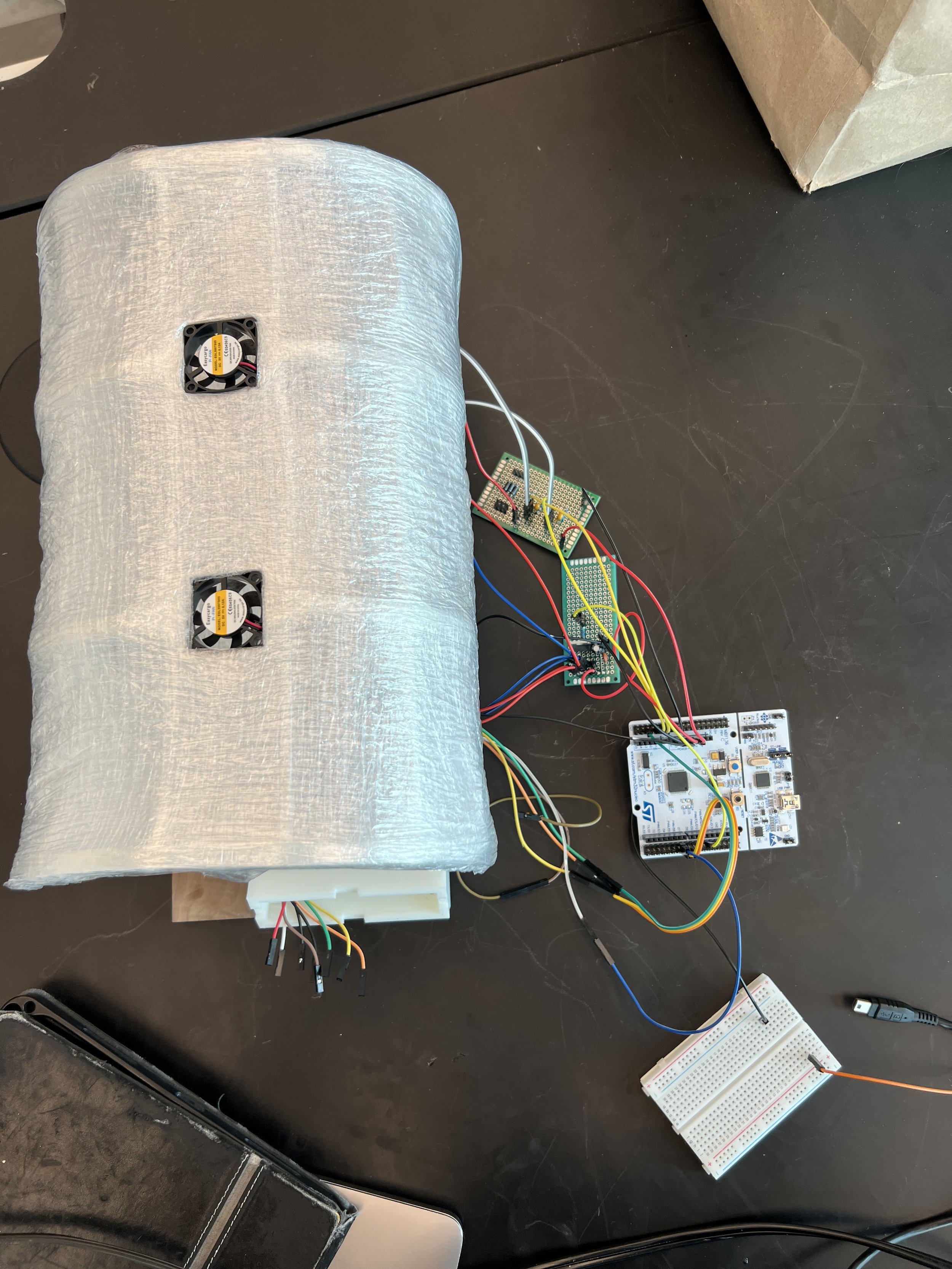
Our demonstration involved intentionally increasing the air temperature inside the enclosure using a hair dryer. We observed how using this method caused the LEDs to cycle through the modes to indicate the increase in temperature measured by the two thermistors. Once the maximum temperature threshold was reached, we pressed the user button to acknowledge the alarm and the internal temperature. Pressing the button